2026-10-21 ·
Preparing Appliances for Rainy Season Moisture in Palo Alto
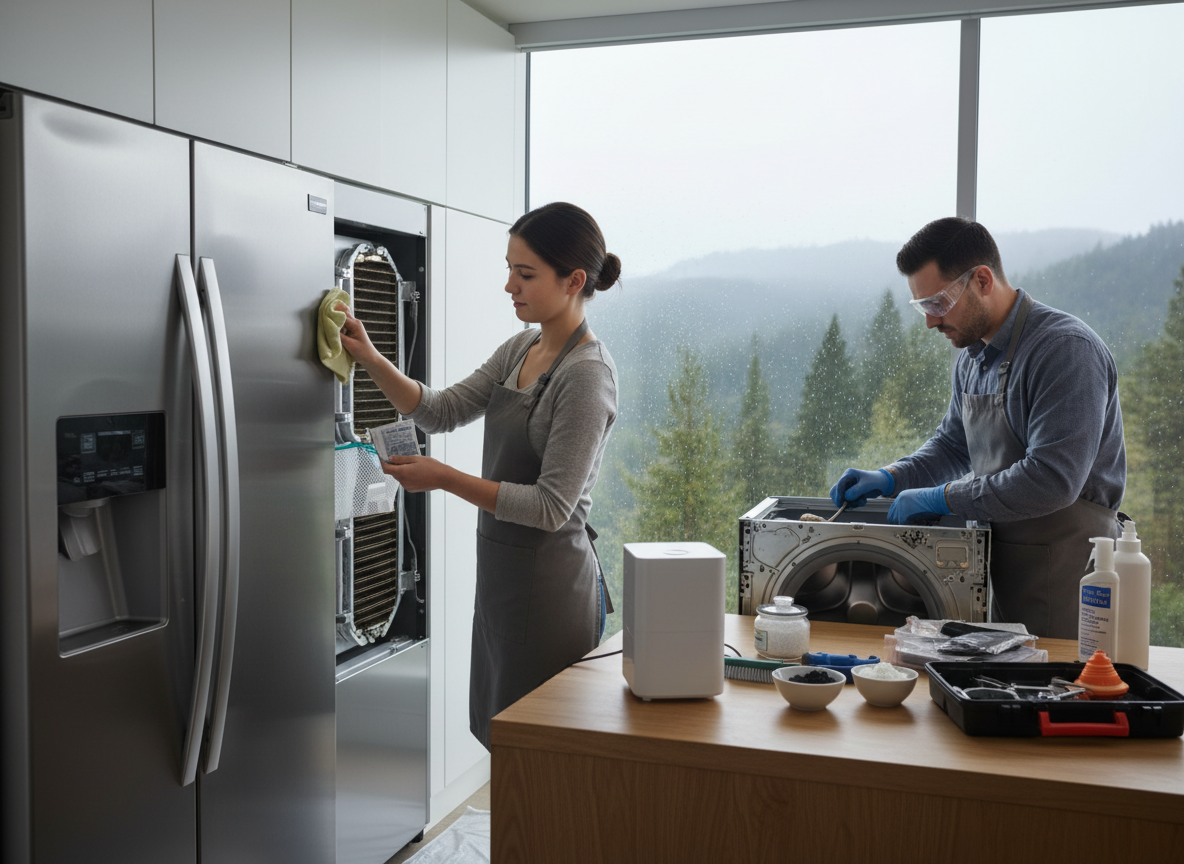
Palo Alto's mild Mediterranean climate means cool, wet winters that increase indoor humidity and ground moisture, especially in homes built before 1960 in Professorville and Downtown Palo Alto. Start by inspecting door seals on refrigerators and ensuring washers have adequate drainage clearance in garages or utility rooms common to Barron Park and Midtown properties.
Assessing Moisture Risks in Local Housing Stock
Many Palo Alto residences in Professorville and Southgate feature raised foundations or partial basements that collect damp air during November through March rains. This humidity accelerates corrosion on compressor coils and electronic controls in refrigerators, shortening typical 10–15 year lifespans when unchecked. Homes near the Palo Alto Baylands Nature Preserve also face higher salt-air exposure that speeds rust on metal appliance frames. Walk through utility areas monthly once temperatures drop below 55°F and note any condensation on exterior walls or floors. In College Terrace and Charleston Meadows, slab-on-grade construction can trap moisture under appliances, leading to electrical shorts in dishwashers and ovens. Checking these patterns early prevents failures that often require refrigerator repair calls during peak winter months.
Protecting Refrigerators from Humidity Buildup
Focus first on the refrigerator because its evaporator coils and door gaskets suffer most from prolonged dampness in Santa Clara County homes. Clean the condenser coils at the bottom or rear every 60–90 days using a coil brush and vacuum to remove dust that holds moisture. Verify the door seal by closing it on a dollar bill—if the bill slides out easily, replace the gasket before winter arrives. Place a small desiccant pack inside the crisper drawers during extended rainy periods to absorb excess humidity. In Midtown and Southgate kitchens with limited ventilation, ensure at least 2 inches of clearance behind the unit for airflow. These steps reduce the chance of frost buildup or mold on interior surfaces that homeowners in Menlo Park often encounter when similar precautions are skipped.
Managing Washers and Dryers in Wet Conditions
Front-load washers in Palo Alto garages or laundry rooms absorb ambient moisture that promotes mildew in the drum and drain pump. Leave the door ajar after each cycle and run a monthly hot-water clean cycle with 2 cups of white vinegar. Check the drain hose connection for secure fitment, as heavy winter rains can cause minor flooding that backs up into the machine. Dryers require lint trap and exterior vent cleaning every 3–4 months to prevent restricted airflow worsened by humid outdoor air. Homes near Stanford University or the Stanford Shopping Center often route dryer vents through attics where condensation forms; inspect these lines for standing water. When issues arise from these seasonal factors, prompt attention keeps repair needs minimal compared to neglected units in nearby Los Altos properties.
Additional Steps for Ovens, Dishwashers, and Microwaves
Ovens and dishwashers in older Professorville homes can develop moisture-related control board faults when steam lingers in poorly vented kitchens. Wipe interior surfaces dry after use and run the self-clean cycle only on dry days to avoid adding extra humidity. Microwaves benefit from monthly interior wipe-downs and checking the door seal for gaps that allow damp air inside. For residents in Charleston Meadows or Barron Park considering service across Santa Clara County, these habits complement the guidance in related discussions on local power fluctuations affecting dishwashers. Consistent attention to seals and ventilation during the rainy season maintains reliable performance without unexpected downtime.